

AI football analytics has spent a decade as a backroom thing, a number whispered by a stats nerd in the corner of a coaching staff while the manager nodded and did whatever he was going to do anyway. That number was usually xG, expected goals, and it changed how we argue about football without ever really changing how football was played. This tournament is the moment that shifts. The 2026 World Cup, which kicks off June 11, is the first one where AI football analytics is not just measuring the game from the stands but actively suggesting how to play it, calling offsides with digital body-doubles, and handing every one of the 48 teams a generative AI assistant trained on hundreds of millions of data points.
Here is what is actually happening, what is real versus hype, and why the quiet part of this World Cup might be the most interesting part.
xG was the warm-up act
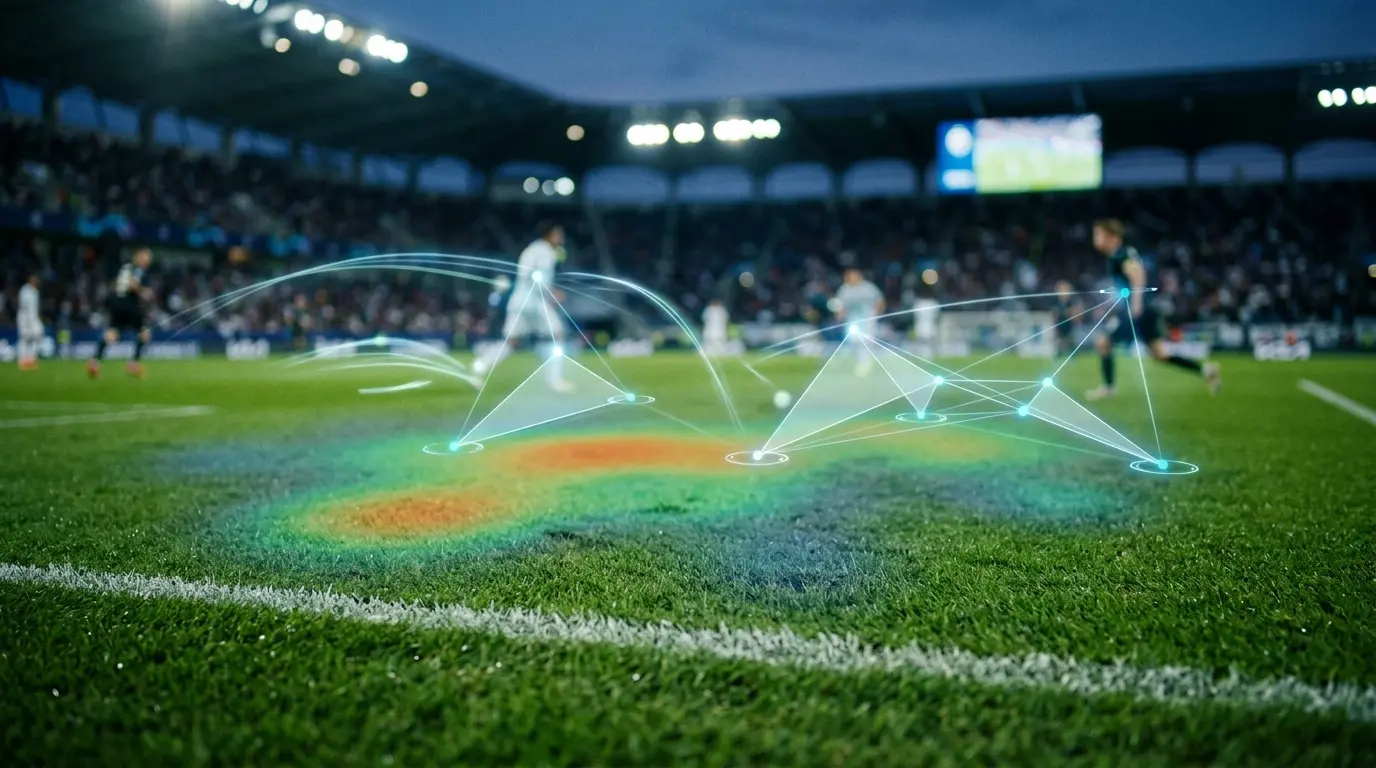
To understand where we are, remember where xG took us. Expected goals assigns a probability to every shot based on its location, angle, and context, then sums it up to tell you how many goals a team “should” have scored. It was revolutionary precisely because it was boring: a single, defensible number that cut through the noise of “he should’ve buried that.” Over the 2010s it crept from blogs into broadcasts into the touchline. By the last World Cup it was on your TV graphics.
But xG only ever did one thing: describe what happened. It is a rear-view mirror. It tells you the shot you took was worth 0.07 goals. It does not tell you where to stand so the next shot is worth 0.4. That gap, between describing the game and prescribing it, is exactly the gap generative AI has walked into.
Generative tactics: the actual leap
The headline shift is from analytics that grade the past to analytics that propose the future, and the clearest proof of concept already exists. It is called TacticAI, and it came out of a multi-year collaboration between Google DeepMind and Liverpool FC, published in Nature Communications in 2024.
DeepMind’s TacticAI: an AI assistant for football tactics | Petar Veličković
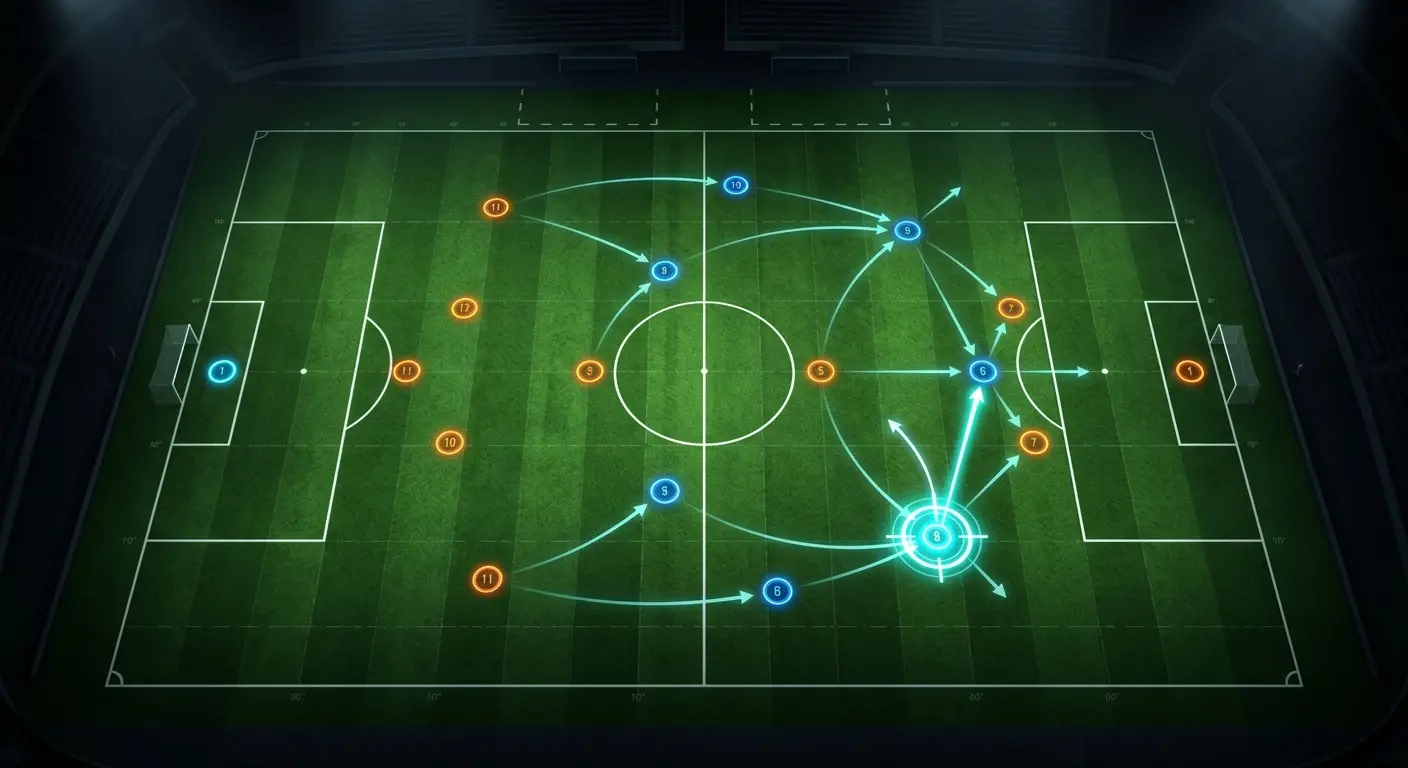
TacticAI does two things. Its predictive half forecasts outcomes from a given setup, who is likely to receive the ball at a corner, whether a shot is likely to come. Its generative half is the genuinely new bit: it suggests adjustments. Reposition this defender, nudge that runner, and watch the predicted shot probability move. A coach can sit with it, sample alternative corner-kick setups, and pick the one the model rates highest. It is, functionally, autocomplete for set-piece design.
The number that made everyone sit up: in a study with Liverpool’s own experts, TacticAI’s suggested tactics were preferred over the setups actually used in real matches 90% of the time, and its generated adjustments were judged indistinguishable from real ones. It focused on corners specifically because they are the most controllable moment in football, a dead-ball reset where a coach can actually impose a plan. That is the beachhead. The concept, generative AI proposing player positioning to shift a probability, is the thing that scales.
This is the leap worth sitting with. We have moved from “your corner was worth this much” to “here is a corner worth more, want to try it.” That is not analytics describing football. That is analytics designing it.
What FIFA is actually rolling out this tournament
Here is where AI football analytics stops being a research paper and becomes tournament infrastructure, because FIFA has put real, named tools on the pitch for 2026.
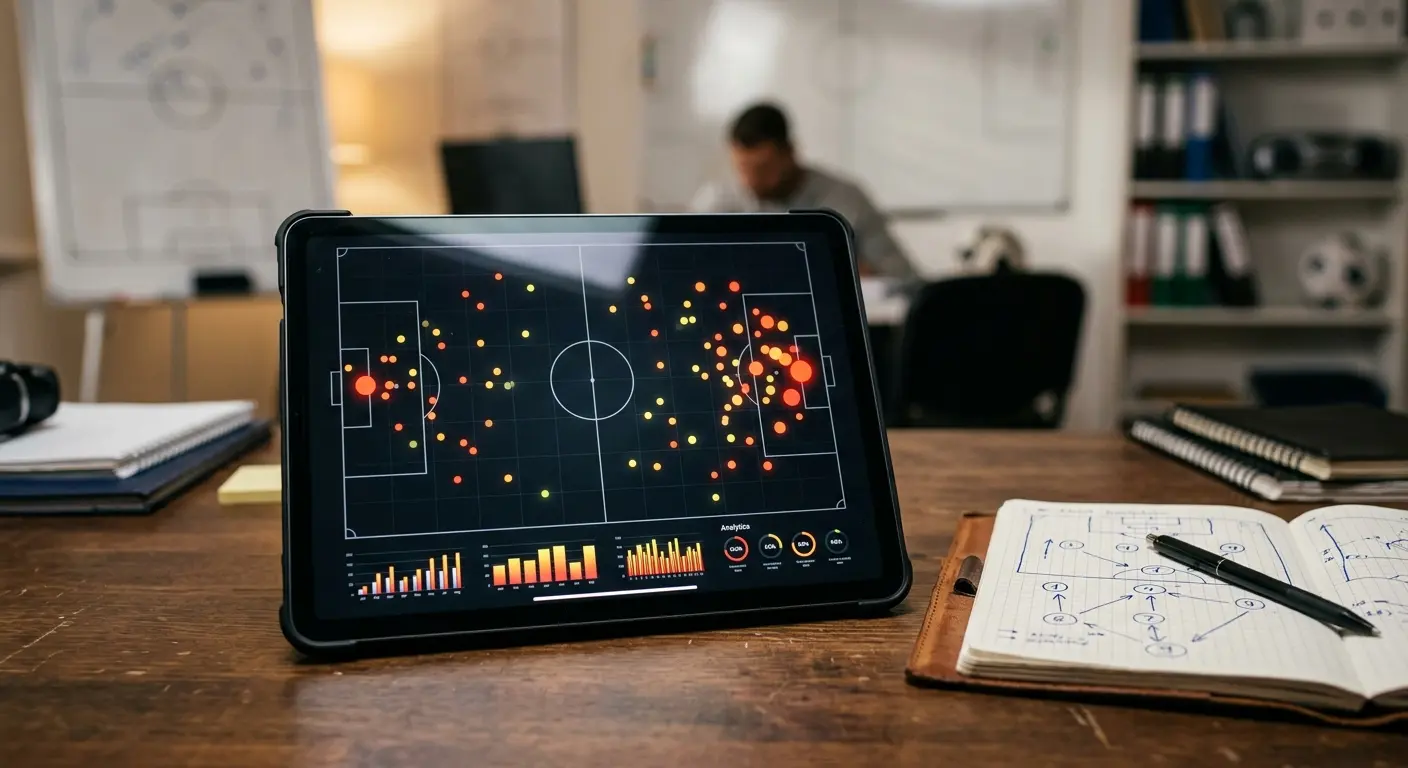
The big one is Football AI Pro, built with FIFA’s official technology partner Lenovo. Per FIFA’s own announcement, it runs on a “Football Language Model” and analyses hundreds of millions of FIFA-owned football data points to generate insights as text, video, graphs and 3D visualisations. Crucially, FIFA is giving access to all 48 nations, explicitly framing it as a way to “level the playing field” between rich and poor federations who could never previously afford a data-science department. One genuinely important caveat, stated plainly by FIFA: the tool is for pre-match and post-match analysis, not live in-game use. No coach is getting AI tactics whispered in his ear during play. Not yet.
The distinction that matters here, and one a lot of breathless coverage skips, is that this is not just ChatGPT for football. A general-purpose model asked about pressing shape would scrape commentary, Wikipedia and fan forums. FIFA’s Football Language Model is trained on structured, validated match data and FIFA’s own datasets. The output is only as good as the data behind it, and the data behind this is the real thing.
Then there is the officiating side, which is where the generative part gets visible to you, the viewer.
The 3D avatars calling offside
Semi-automated offside technology, SAOT, debuted at Qatar 2022 as those slightly eerie skeletal mannequins on the replay screen. For 2026 it is getting a generative-AI overhaul. Per FIFA and Lenovo, every player at the tournament is being digitally scanned, each scan taking around a second and capturing accurate body-part dimensions, to build a precise 3D avatar, a digital twin. Those avatars replace the generic computerised mannequins in offside replays, showing the actual modelled player in the broadcast animation.
The point is twofold. For officials, the body-accurate model improves tracking when players are moving fast or partially hidden, which is exactly when the old systems struggled. For fans, the replay finally looks like the players involved rather than a PlayStation 1 cutscene, which matters more than it sounds, because most of VAR’s credibility problem was never accuracy. It was that nobody could understand or trust what they were being shown. Per Lenovo, the avatar system was trialled at the FIFA Intercontinental Cup in Qatar in December 2025 before this rollout.
Two more bits of kit round it out. The official Adidas match ball, the Trionda, carries an internal chip that helps detect offside, the ball leaving play, and handball, feeding precise touch data into the same decision pipeline. And referee point-of-view replays, first seen at the Club World Cup, use neural networks to de-shake and clean up footage shot from cameras on the officials themselves.
The honest part: hype, limits, and the soul question
Gamerative would rather give you the cold water now than let you swallow the marketing.
First, none of the headline tactical AI operates live. Football AI Pro is a pre- and post-match tool. TacticAI is a design and analysis assistant, not a sideline oracle barking real-time orders. The image of a coach getting AI-generated counter-tactics mid-match is not 2026. It is a future that the building blocks now point toward, which is a very different thing from a thing that exists.
Second, every one of these systems is only as good as its data and its framing. An offside model with a body-accurate avatar is still drawing a line at a frozen moment and arguing about millimetres, and millimetre-precise offsides remain genuinely divisive regardless of how pretty the 3D model is. Better visualisation builds trust; it does not settle the philosophical argument about whether a shoulder a centimetre offside should rule out a goal.
Third, and this is the one football people actually care about: there is a real and reasonable worry that the more the game leans on machines, the further it drifts from the human chaos that makes it worth watching. That tension, that the same technology that removes officiating errors also risks sanding down the game’s rough, arguable, gloriously human edges, is the live debate of this tournament. There is no neat answer to it, and anyone selling you one is selling something.
What is genuinely true is more modest and more interesting than the hype. AI has graduated from describing football to proposing football, it is being handed to every nation at this World Cup instead of just the rich ones, and it is going to be more visible to you, the viewer, than at any tournament before it. That is a real shift. It just is not a robot manager.
The New Age of Football Analytics
AI football analytics crossed a line somewhere between the last World Cup and this one. It used to tell you what a shot was worth. Now it can suggest a better shot, scan a player into a digital twin to judge an offside, and put a generative analyst in the hands of all 48 teams. The 2026 World Cup is the first tournament where all of that is operational at once, even if the flashiest version, live machine-made tactics, is still on the horizon rather than the touchline.
Watch the offside replays this summer and you will see the quiet revolution rendered in 3D. The number-crunchers in the corner finally have something that does more than count. The game is still gloriously human. It just has a much smarter pencil now.
FAQ
How is AI football analytics being used at the 2026 World Cup?
AI football analytics is being used at the 2026 World Cup in several ways: FIFA’s Football AI Pro, built with Lenovo on a “Football Language Model,” gives all 48 teams a generative AI assistant trained on hundreds of millions of data points for pre- and post-match analysis; AI-enabled 3D player avatars upgrade the semi-automated offside system; the Adidas Trionda ball carries a chip that feeds offside, out-of-play and handball data; and neural networks clean up referee point-of-view replays.
What is generative tactics in football?
Generative tactics refers to AI that does not just measure what happened but proposes new setups to change future outcomes. The clearest example is TacticAI, developed by Google DeepMind and Liverpool FC, which suggests adjustments to player positions at corner kicks to raise or lower the probability of a shot. In testing, its suggestions were preferred over real-match tactics 90% of the time.
Is xG still useful if AI can do more now?
Yes. Expected goals (xG) remains a core descriptive metric that measures the quality of chances. The shift is that newer AI does not replace xG, it builds on it, moving from describing what happened to proposing how to change it. xG was the foundation that made richer tactical AI possible.
Does AI make tactical decisions during World Cup matches?
No. FIFA’s Football AI Pro is explicitly for pre-match and post-match analysis, not live in-game use. Tactical AI tools like TacticAI are design and analysis assistants, not real-time sideline systems. AI is used live for officiating support, such as semi-automated offside, but not for in-match coaching decisions.
Will every team have access to AI analytics, or just the rich ones?
FIFA has stated that Football AI Pro will be available to all 48 participating nations, framing it as a way to help level the playing field between wealthier and poorer federations that previously could not afford large data-science teams.